
A memorable beef satay starts with tender beef, a fragrant marinade and a creamy peanut and coconut milk sauce. To make beef satay at home, thread thinly sliced beef onto skewers and cook until just done. The sauce brings the nutty, gently sweet finish that makes each bite feel comforting and full of flavour.
It’s easy to see why satay is loved: smoky, savoury beef and rich peanut sauce make a welcoming combination, whether you’re sharing a meal or craving Malaysian flavours. This guide covers preparing the beef, making the sauce and cooking the skewers, then introduces Truly Malaysian Village, where you can enjoy authentic Malaysian food without cooking at home.
Follow the steps for a practical home-cooked version, with tips for keeping the beef tender and balancing the sauce. You’ll also find out how beef satay fits among our range of traditional Malaysian dishes.
Key Takeaways
- Balance the peanut and coconut milk sauce with spice and tamarind for a creamy, savoury finish.
- Marinate the beef with coconut milk and seasonings to build flavour before cooking.
- Cut the beef into even pieces so it cooks more consistently on the skewers.
- Soak bamboo skewers before grilling to help prevent them from scorching.
- Explore Malaysian food in Adelaide for other comforting dishes when you’d rather leave the cooking to someone else.
Peanut and coconut milk sauce
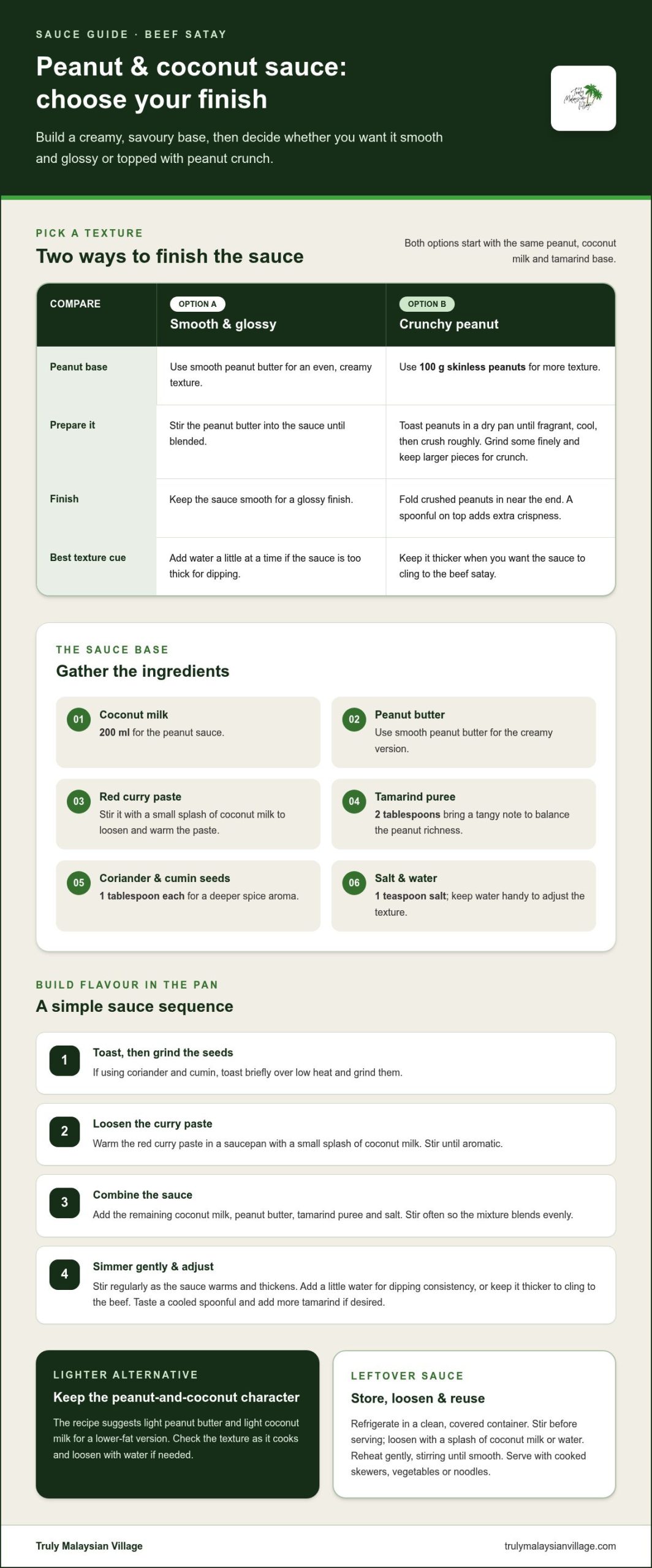
- Gather the sauce ingredients. Gather the coconut milk, peanut butter and red curry paste for the sauce. Set out 2 tablespoons of tamarind puree for a tangy note, plus water for adjusting the texture. For a deeper spice aroma, use 1 tablespoon each of coriander seeds and cumin seeds. These quantities create a creamy, savoury sauce with gentle warmth and a rounded peanut flavour.
- Prepare a crunchy peanut variation. Use 100 grams of skinless peanuts when you want a sauce with more texture. Toast them in a dry pan until fragrant, then cool and crush them roughly. Keep some larger pieces for crunch, and grind the rest finely to thicken the sauce. If you prefer a smoother finish, use the smooth peanut butter instead. A spoonful of chopped peanuts on top adds a final crisp contrast.
- Build the flavour in the pan. If using coriander and cumin seeds, toast them briefly over low heat, then grind them. Add the red curry paste to a saucepan with a small splash of coconut milk. Stir until the paste loosens and smells aromatic, then add the remaining coconut milk, peanut butter and tamarind puree. Keep the heat gentle and stir often so the mixture blends evenly without catching on the base.
- Simmer and adjust the consistency. Let the sauce simmer gently for 5 minutes, stirring regularly. Add a little water if it becomes too thick for dipping, or keep it thicker to cling to beef satay. Taste a cooled spoonful and balance the peanut richness with more tamarind if desired. Fold in crushed peanuts near the end for a crunchy satay sauce, or leave them out for a smooth, glossy finish.
- Store and reuse leftovers. Transfer leftover peanut sauce to a clean, covered container and refrigerate it. Stir before serving, as the sauce may thicken while chilled; loosen it with a small splash of coconut milk or water. Use it again as a dip for cooked skewers, a dressing for vegetables, or a sauce for noodles. Reheat gently in a saucepan, stirring until smooth.
Keep the coconut milk amounts distinct as you prepare the sauce: the recipe’s peanut sauce includes 200 millilitres of coconut milk, and the recipe uses 350 millilitres of coconut milk in total. The satay beef recipe uses 250ml of coconut milk. Use the stated sauce amount for this pan, and keep the other listed quantities in mind when assembling the full recipe. For a lower-fat version, the recipe suggests light peanut butter and light coconut milk. These are the lighter alternatives while preserving the sauce’s peanut-and-coconut character.
Cook the peanut sauce on medium-low heat for 6-7 minutes, stirring steadily as it warms and thickens. The recipe uses 1 teaspoon of salt; stir it in with the other sauce ingredients, then taste before serving so the seasoning is distributed throughout. Keep the heat controlled and continue mixing so the peanut butter combines smoothly with the coconut milk. If using the lighter alternatives, check the texture as it cooks, loosening it with water if needed.
Malaysian food in Adelaide
- Choose the kind of meal you’re craving. Start with the cooking style, then decide how rich or light you want dinner to feel. Grilled skewers bring charred edges and savoury seasoning, while a coconut-based curry offers a softer, creamier profile. Noodle dishes make a satisfying choice when you want a complete bowl rather than separate components. In Adelaide, comparing these styles helps you find Malaysian food to suit the occasion, whether you’re sharing dishes or choosing a hearty main.
- Look for contrast across the plate. Malaysian meals often balance savoury, sweet, sour and spicy flavours. A rich main can feel more rounded with crisp vegetables or a tangy condiment; chilli paste adds heat without changing the whole dish. Consider how each element works together rather than judging a meal by its spiciest ingredient alone. If you prefer gentler flavours, choose a creamy or grilled option and add chilli gradually. For a bolder meal, pair a strongly seasoned main with refreshing, crisp textures.
- Use cooking methods as a guide. Grilling gives meat a toasted surface, while slow cooking lets spices develop throughout the dish. Stir-frying cooks ingredients quickly over high heat, creating a different texture from a gently simmered curry. Ask yourself whether you want smoky, tender or saucy elements, then choose accordingly. These clues make menus easier to understand, even if a dish name is unfamiliar. A moderate level of heat can suit diners who want spice without letting it dominate every other flavour.
- Make the meal work for your table. For a shared dinner, combine contrasting choices rather than ordering several dishes with the same richness or heat. A grilled main, a saucier dish and a fresh side create variety in texture and flavour. If you’re dining with people who have different preferences, let each person choose a preferred spice level or style. To enjoy Malaysian cooking without preparing the meal yourself, plan a Malaysian dining experience in Adelaide and choose dishes that suit your table.
When comparing options, a listed price can help you decide how a dish fits the meal you have in mind. Consider it alongside the other menu choices rather than deciding on a main in isolation. If you’re sharing, think about whether the dish complements your group’s other choices; if you’re ordering for yourself, consider the style and richness you prefer. Reviewing the menu before ordering also helps you plan a meal that suits your preferences.
Use the same approach when balancing familiar choices with something new. First settle on the kind of meal that appeals, then consider how each dish might work with the rest of the table. Different textures and cooking styles can make a shared meal more varied, while a single main may suit a focused dinner. Keep individual preferences in mind, especially when diners differ in how much heat or richness they enjoy. A little thought before ordering can help you choose Malaysian food in Adelaide that suits the occasion.
What is usually included with beef satay in Adelaide?
- Start with the skewered beef. Beef satay centres on seasoned beef cooked on skewers and served with a dipping sauce. For a home-style plate, cut the beef evenly so the pieces cook at a similar pace. The skewers are easy to share, and the grilled meat contrasts deliciously with the sauce. Menu presentations vary, so consider the beef and sauce the core pairing rather than assuming every plate has identical sides.
- Pair it with peanut sauce. A peanut-based dip is a familiar partner for satay, bringing a creamy, nutty note alongside the grilled beef. Serve it in a small bowl so diners can control each dip, or spoon a little beside the skewers for easy sharing. Keep the sauce separate if you want the beef’s charred edges to remain distinct. A thicker sauce clings to each piece, while a looser one works well for dipping.
- Add fresh, crisp elements. A home-serving example can include ¼ pineapple, 1 Lebanese cucumber, 2 cups of bean sprouts and 3 spring onions. Dice the pineapple and cucumber, then combine them with the sprouts and sliced spring onions shortly before serving. These ingredients add fresh texture beside warm beef and rich sauce. Keep the salad separate until serving, so the bean sprouts retain their crispness and the pineapple’s juice doesn’t soften the other ingredients.
- Choose sides to suit the meal. Decide whether the skewers are a shared starter or the main part of dinner, then add sides accordingly. For a lighter spread, serve the beef with the crisp salad and dipping sauce. For a more filling home meal, add rice as a separate accompaniment. This is a serving suggestion, not a claim that every Adelaide restaurant includes rice or salad automatically. Check the dish description for the components actually named on its menu.
- Read the menu description closely. Look for details about the meat, sauce and any listed sides before choosing. A description naming peanut sauce tells you what flavour to expect; a named salad or rice accompaniment indicates what comes with it. When comparing beef satay in Adelaide, consider whether you want a simple skewer-and-dip plate or a fuller combination. That distinction helps you match your order to your appetite and how you plan to share the meal.
Best satay
- Look for beef that stays tender. A good satay starts with a cut suited to quick cooking, such as rump or fillet. Even pieces help each skewer cook consistently, while very thick chunks can brown outside before warming through. Thin slices need close attention because overcooking can make them tough and chewy. At home, trim away excess sinew and cut the beef evenly before adding the marinade. This preparation helps the meat take on seasoning and makes each bite easier to enjoy.
- Judge the marinade by balance. Coconut milk adds richness, while curry powder and red curry paste bring spice. A useful beef marinade combines 150 millilitres of coconut milk with aromatics and seasoning, then coats the meat evenly. Refrigerate the beef for at least 2 hours, preferably overnight, so the flavours have time to settle into the surface. The aim is a fragrant coating, not a pool of liquid that drips away before cooking.
- Notice the char without losing the beef’s tenderness. Satay should have a browned surface and a juicy centre, not a dry, heavily blackened finish. When cooking at home, turn the skewers as they colour and move them away from the hottest part if the marinade darkens too quickly. Thin strips cook faster than cubes, so watch closely instead of relying only on colour. Resting briefly after cooking lets the juices settle before serving.
- Check that sauce supports, rather than hides, the meat. Peanut sauce should complement savoury beef with a creamy texture and balanced sweet, tangy or spicy notes. Try a small dip first so you can taste both the skewer’s seasoning and the sauce. A thick coating can overwhelm delicate marinade flavours, so use only enough to bring them together. Chopped peanuts add texture, while a smooth dip keeps the focus on the meat.
- Compare the whole eating experience. Consider the beef’s texture, the aroma of its seasoning, the char from cooking and how well the sauce pairs with it. For a shared meal, chicken satay offers a contrast in protein and texture beside beef skewers. At home, try one skewer plain before adding sauce; this reveals whether the marinade has enough flavour on its own. These practical checks help you judge what makes satay satisfying, rather than relying on appearance alone.
Satay skewers
- Cut the beef evenly. For a consistent cook, cut beef into 2.5 cm cubes before marinating. Similar-sized pieces brown at a similar pace, helping prevent small pieces drying out while larger ones remain undercooked. Thread each piece through its centre, leaving a little space between cubes so heat can reach their sides. Avoid packing beef tightly together. Even spacing also makes it easier to turn each skewer and brown the meat without tearing it.
- Soak bamboo skewers before grilling. Submerge bamboo skewers in water for 2 hours before cooking over a barbecue or charcoal. This gives the wood time to absorb water and helps reduce scorching over direct heat. Drain the skewers before threading the marinated beef. Metal skewers don’t need soaking, but they can become hot during cooking, so handle them carefully. Choose skewers that fit your grill and leave enough length for safe turning.
- Thread the beef without overcrowding. Arrange the cubes in a single line, keeping the pieces close enough to stay secure but not pressed together. A recipe using 12 wooden skewers can be portioned evenly, while another preparation may yield 12 to 14 beef satay skewers. The yield depends on the amount of beef and the pieces’ size. Keep the marinade from pooling on the skewer, as excess liquid can drip onto the heat and darken the surface too quickly.
- Cook each side over steady heat. Set the barbecue or grill to medium-high heat, then lay the skewers across the cooking surface. Turn the beef regularly so it cooks evenly on all sides. This gives the cubes time to colour on each face. If the outside darkens too quickly, move the skewers to a cooler part of the grill. Avoid prolonged cooking, which can leave beef dry and chewy.
- Rest the skewers before serving. Allow the cooked beef to rest for 3 minutes before serving. This brief pause makes the skewers easier to handle and gives the surface heat time to settle. Serve them warm with peanut sauce, keeping the dip separate until guests are ready. For a meal out in Adelaide, book a table for satay and enjoy the skewers without tending the grill yourself.
Truly Malaysian Village: Nasi Lemak Ayam Rempah
Truly Malaysian Village is a natural next step when you’d like to enjoy Malaysian food in Adelaide without preparing it at home. Nasi Lemak Ayam Rempah is a signature dish, and Beef Satay and Chicken Satay offer familiar skewer options. For a different beef dish, try Beef Rendang.
Choose Nasi Lemak Ayam Rempah for a Malaysian meal, or explore the other dishes when sharing a table. TMV Gift Cards can also make a thoughtful present for someone who enjoys Malaysian flavours.
For a meal or TMV Gift Cards, visit trulymalaysianvillage.com or contact Truly Malaysian Village to plan your visit.
Make your next meal a Malaysian one
Cooking satay at home can bring Malaysian flavours to your table. A meal out offers another pleasure: time to settle in, share food and leave the cooking to someone else. If beef satay in Adelaide is what you’re craving, choose the kind of meal that suits your plans, whether that means a relaxed dinner or sharing dishes with people you care about.
Truly Malaysian Village offers a welcoming way to enjoy Malaysian food in Adelaide. Let your next meal be a chance to try something familiar or choose a new favourite. Plan your visit with Truly Malaysian Village and look forward to sharing good food around the table.
Frequently Asked Questions
Can I find beef satay near Adelaide CBD?
Truly Malaysian Village serves Beef Satay, but its restaurant is in Allenby Gardens, not Adelaide CBD. If you’re travelling from the city centre, factor in the trip to the restaurant when planning your meal. Chicken Satay is another option on the menu if you’re dining with someone who prefers chicken. Check the restaurant’s location details before setting out.

Article by
Amzar Hariz
Director of Truly Malaysian Village
Disclaimer
The content published on this website may include articles generated or assisted by AI writing tools. While we aim to provide helpful, accurate, and up-to-date information, we do not guarantee that all content is complete, error-free, or suitable for every individual situation.

